Overview
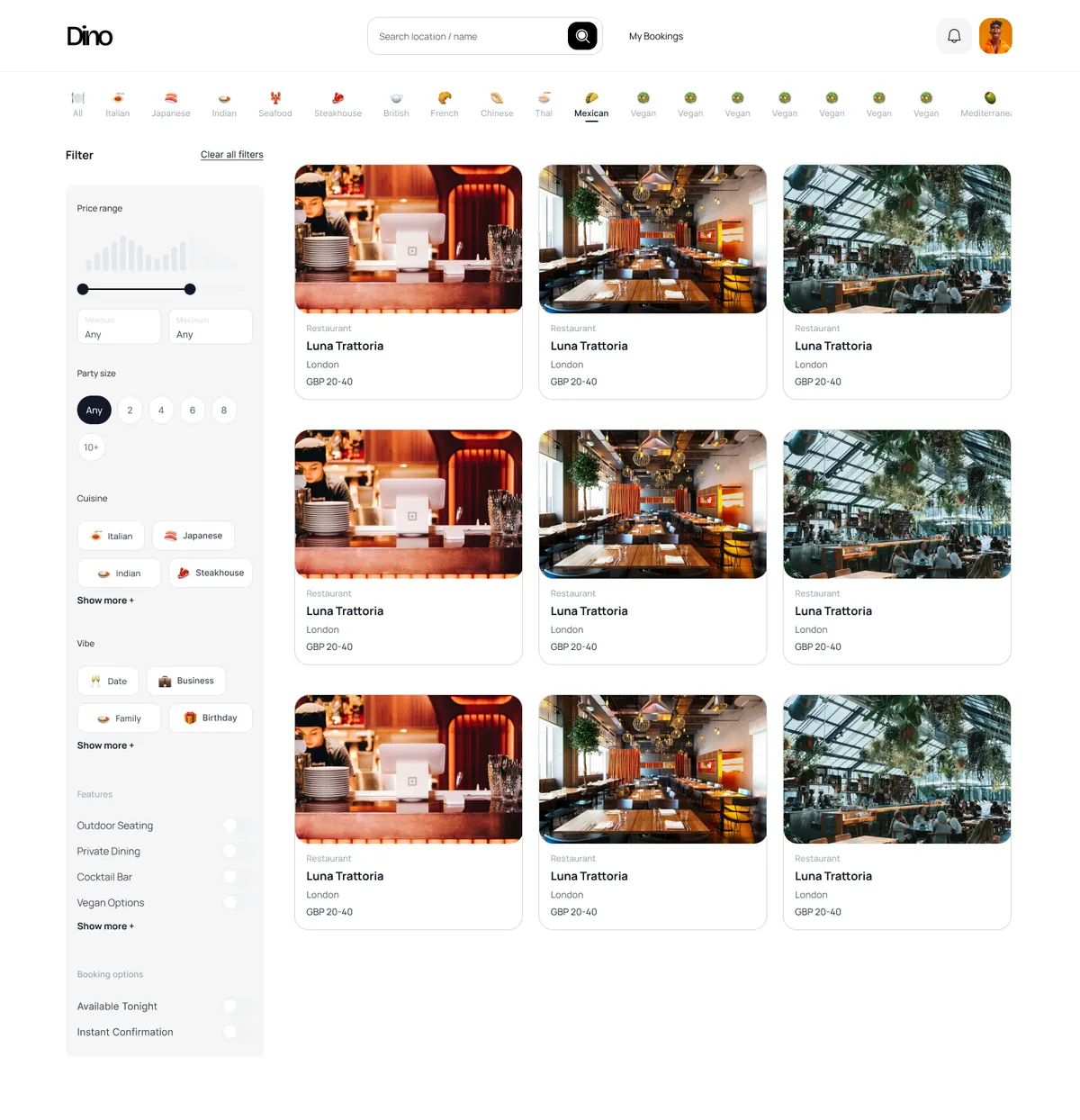
A two-sided table-reservation product for hospitality operators: a consumer-grade diner app and an operator dashboard that stay in sync, built together rather than one with a back office bolted on.
The challenge
A problem everyone knows how to fix, and almost nobody fixes well.
The no-show problem isn't a mystery. When a booking costs nothing to break, some people break it, and an empty table at 8pm on a Friday is money the kitchen already bought ingredients for. A small deposit fixes the maths. The mechanism has existed for years; most booking tools just skip it, or bolt it on so awkwardly that restaurants switch it straight back off.
Dino's founder came to us with a sharper version of the complaint: the big platforms nail the booking and ignore everything wrapped around it. Diners still recite their allergies to a waiter at the table. Pre-ordering barely exists. And a surprising number of venues still run the floor off a paper diary or a spreadsheet someone last tidied up in 2019.
So the brief was two products at once, not one with a back office bolted on. A diner app that holds its own against any consumer app on the phone, and a dashboard a floor manager can grab mid-service and understand without anyone standing over their shoulder.
What was hard: building two sides at once means every feature is really two. What the diner taps and what the venue sees have to stay in sync without a beat of lag. We could have saved time with one shared interface stretched across both users. We didn't, because a floor manager mid-service and a diner on the sofa want opposite things. The part we genuinely underestimated was the kitchen: turning a pre-order into a ticket a slammed kitchen actually trusts took more rounds than we'd planned. A clean data feed isn't the same as a feed the pass believes.
What we did
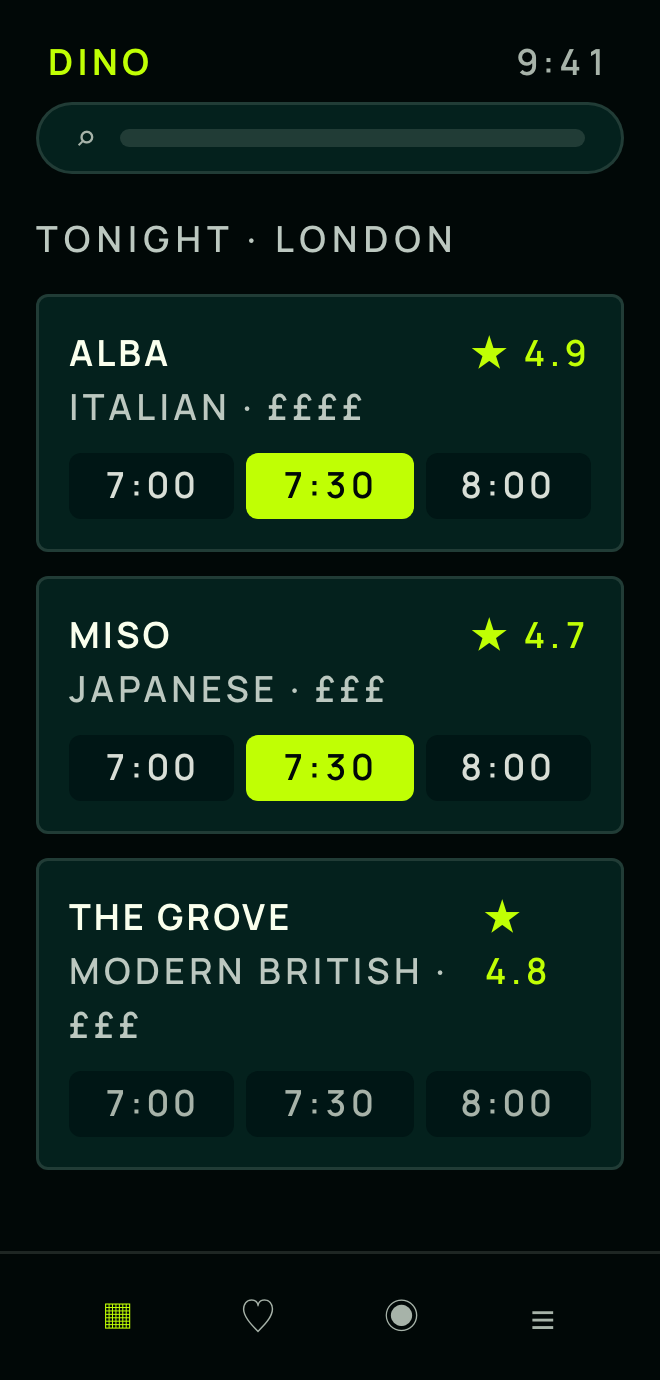
Designed a diner app that does real availability, pre-order by dish, and allergen capture per dish in a single short flow. Every extra screen is a chance to put the phone down.
Built a live, colour-coded table grid for the venue with guest profiles, allergen flags, and incoming pre-orders one tap away.
Integrated a kitchen link so pre-orders land as structured tickets ahead of the booking. The kitchen knows what's coming, and what to leave off the plate, before the doors open.
Automated self-serve onboarding with Stripe-connected deposits and reminders, so a manager sets up in the gaps of a shift without a sales call.
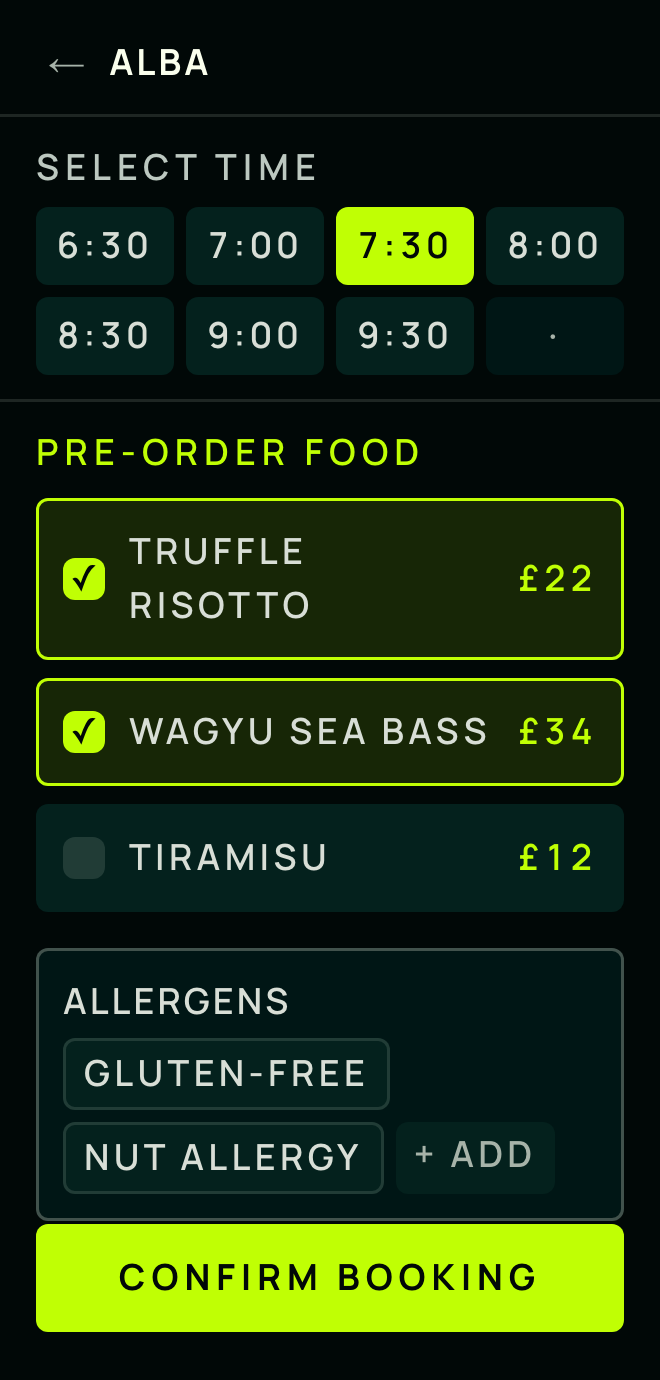
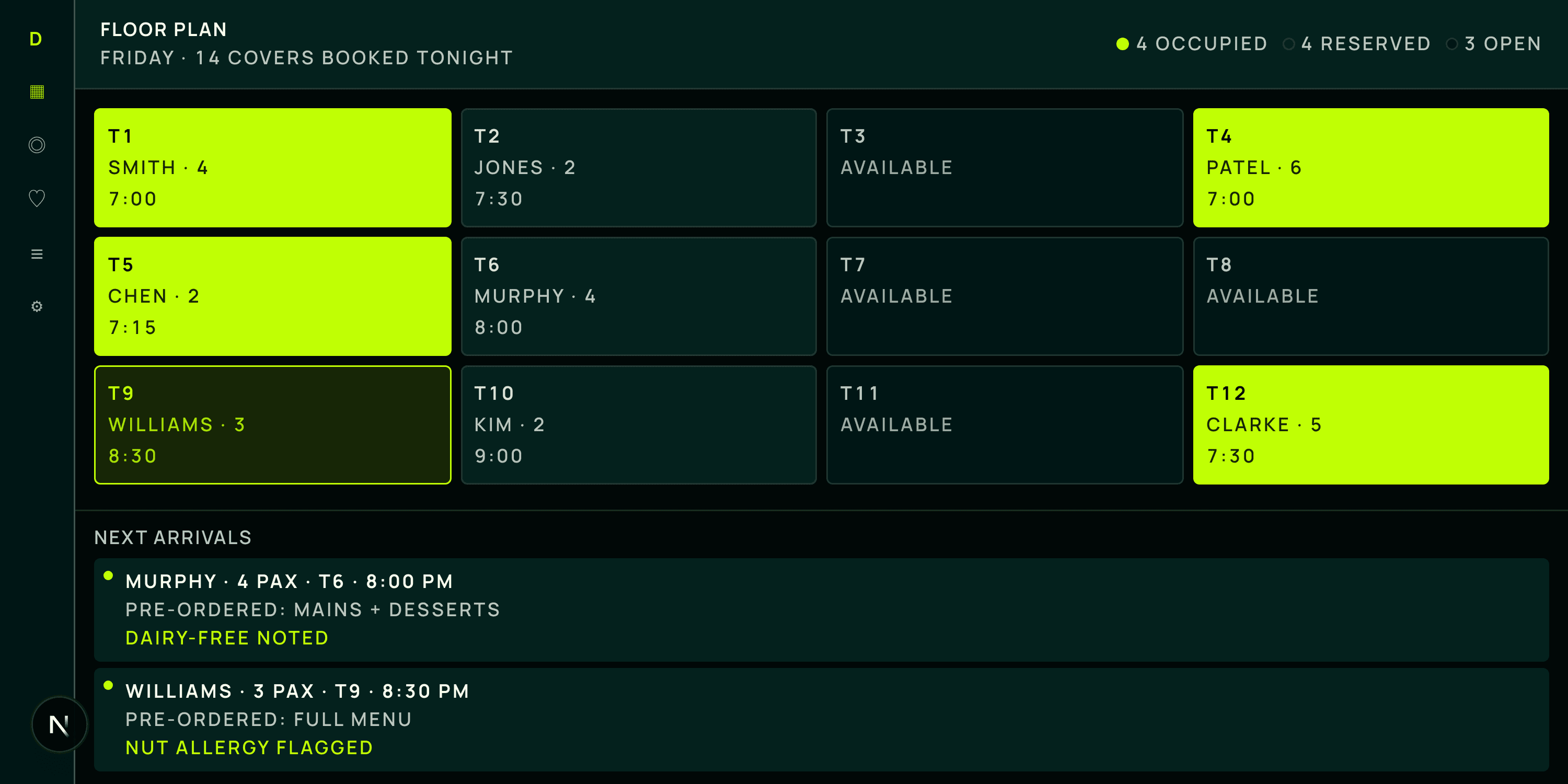
Live table grid with guest details, allergen flags, and pre-order status visible before each party walks in.
The outcome
Two sides of one product built together: a diner app and operator dashboard that stay in sync, each designed for the person using it.
Deposit-backed reservations and automated reminders built in from the start as the simplest honest way to deter no-shows.
Food chosen before arrival flows to the kitchen as structured tickets; allergens captured digitally per dish, replacing the verbal-at-the-door handoff. Full IP and Figma source handed over.
Tech & stack
React Native · Next.js · Supabase · Stripe